
3D printing
What is 3D printing and who developed it?
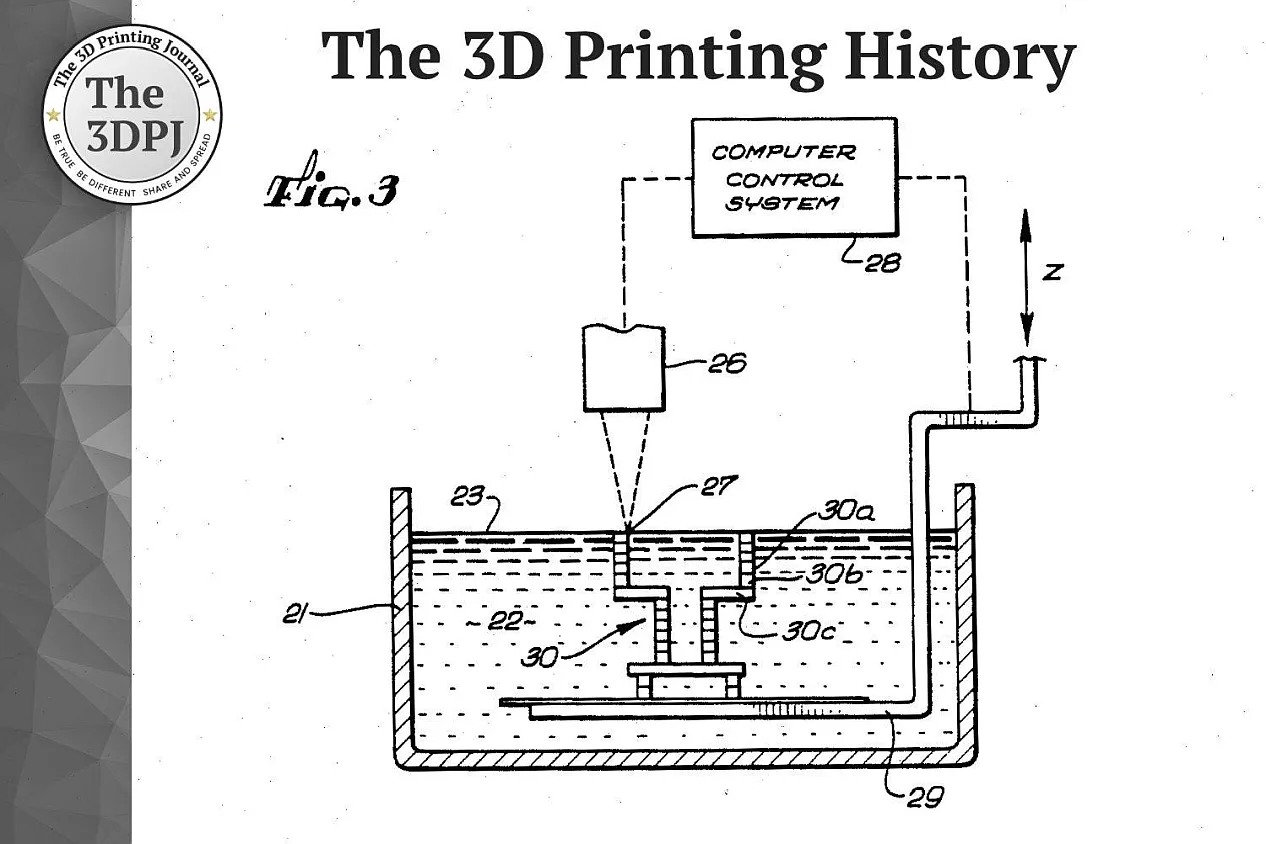
3D printing, also known as additive manufacturing, is a production method where objects are created layer by layer from digital 3D data. The earliest foundation of the technology dates back to 1981, when Japanese engineer Hideo Kodama developed one of the first documented layer-by-layer prototyping processes. His method was groundbreaking — but the patent was never completed, and no commercial machine emerged from his work.
The true commercial breakthrough came in 1984, when American engineer Chuck Hull filed the first stereolithography (SLA) patent and later founded 3D Systems. His first successfully printed object — a small black plastic cup — marked the beginning of modern 3D printing and introduced the STL file format that is still used today.
Unlike traditional subtractive processes such as CNC milling or turning (Drehen), which remove material from a solid block, 3D printing adds material only where it is needed. This unlocks geometric freedom and allows engineers and designers to build shapes impossible to manufacture with conventional methods.
The two main advantages of 3D printing are:
1. Creating extremely complex or undercut geometries
Internal channels, organic curves, impossible draft angles, and negative undercuts can be produced without injection-mold tooling restrictions. Designers gain full freedom to develop lightweight, optimized, or highly customized shapes.
2. Producing realistic prototypes and cost-efficient small batches
3D printing delivers functional parts early in the development cycle. Prototypes can be tested, modified, and re-printed within hours. For low-volume production runs, it eliminates the need for expensive molds and significantly reduces time-to-market.
What began as an experimental method in the 1980s has evolved into one of the most versatile and accessible manufacturing technologies of today.
What 3D printing methods exist?
The evolution of 3D printing methods mirrors the rapid development of the technology itself. Early desktop printers used simple open-frame constructions where the print bed moved on one or two axes. This caused vibration, inconsistent layer bonding, and warping — especially with temperature-sensitive materials like ABS. Over time, manufacturers introduced enclosed chambers, better motion systems, and advanced extrusion technology, which dramatically increased print quality and reliability.
A major influence in this growth was Prusa Research, founded by Josef Průša in Prague. Starting from open-source RepRap designs, the company introduced the Prusa i3 platform — one of the most widely replicated and refined printer architectures in history. Prusa helped standardize reliable consumer-grade printing and made materials such as PLA, PETG, and ABS accessible to millions of users worldwide.
Today, 3D printing spans a wide range of technologies:
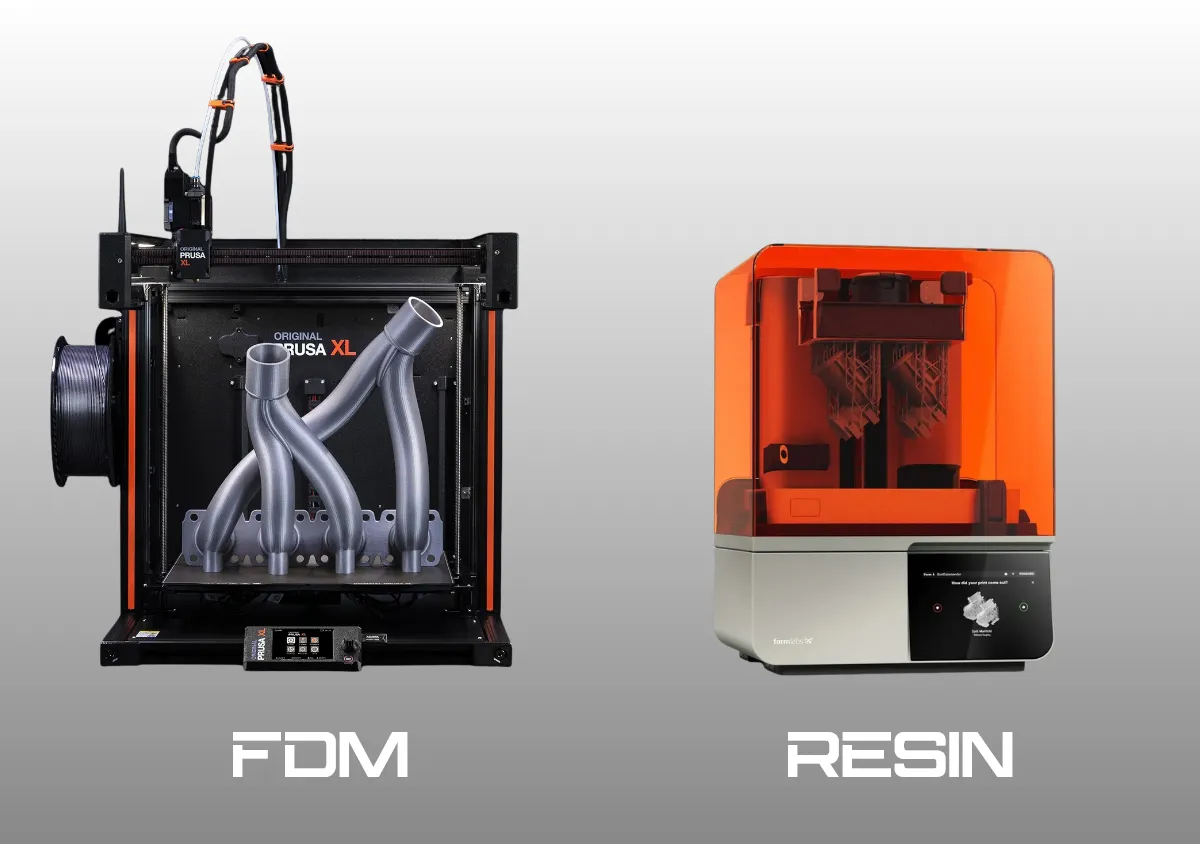
FDM / FFF (Filament Printing)
The most common consumer method. Ideal for everyday parts, prototypes, and functional components.
SLA / DLP / MSLA (Resin Printing)
High detail, smooth surfaces — perfect for visual models, product housings, dental and jewelry applications.
SLS / MJF (Powder-Based Printing)
No support structures needed. Strong, functional nylon parts widely used in engineering, automotive, and aerospace.
DMLS / SLM (Metal Printing)
Industrial-grade metal components produced from stainless steel, titanium, aluminum, or Inconel powders — suitable for tooling, medical implants, motorsport, and high-stress mechanical parts.
In short, consumer-grade printing focuses on accessibility and common plastics, while industry-grade additive manufacturing covers engineering polymers, composites, resins, metals, and large-format production machinery. The range stretches from hobby printers on a workbench to multi-million-euro industrial systems capable of manufacturing end-use parts.
Why 3D Printing Becomes More and More Important
3D printing is becoming an essential part of modern life and industry. At home, users repair everyday objects by printing replacement parts, customize household tools, or create practical solutions that extend product lifecycles. This empowerment to fix, modify, and create makes additive manufacturing a natural extension of DIY culture.
In industry, 3D printing enables rapid prototyping, custom tooling, and small-batch production with unprecedented flexibility. Designers and engineers can validate ideas within hours, drastically accelerating development cycles. Businesses benefit from digital inventory concepts — producing spare parts on demand instead of storing large quantities.
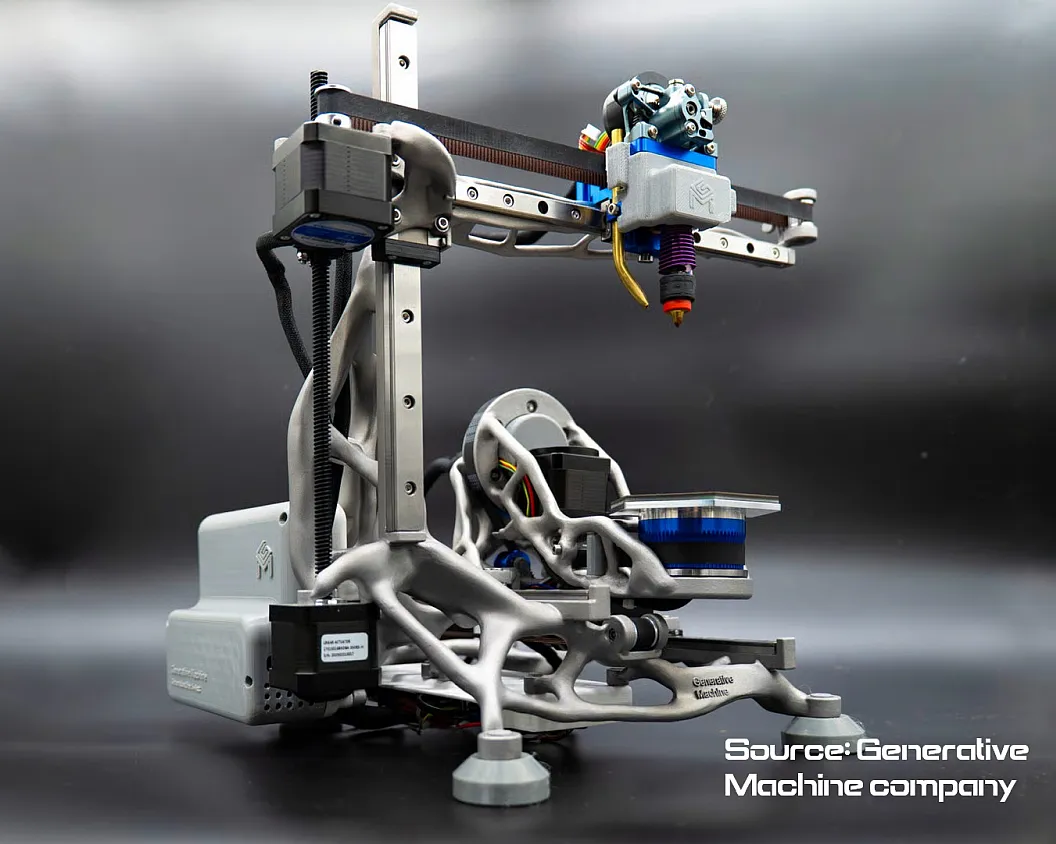
The next evolution is already taking shape: 4-axis and 5-axis printing. Using robotic arms or multi-directional toolpaths, printers can fabricate curved layers, reduce or eliminate supports, improve mechanical strength, and combine additive and subtractive processes into hybrid manufacturing.
Yet despite all technological progress, one critical bottleneck remains: 3D modeling.
Even as AI tools generate basic shapes, high-precision engineering, functional components, and refined aesthetic design still rely on skilled digital modelers. Complex assemblies, tolerance-critical parts, and advanced surface logic cannot be fully automated — especially in automotive, aerospace, or mechanical engineering.
In other words:
3D printing is becoming more accessible every year, but its true potential depends entirely on the quality of the 3D models behind it.

