3D Scanning
What is 3S scanning?
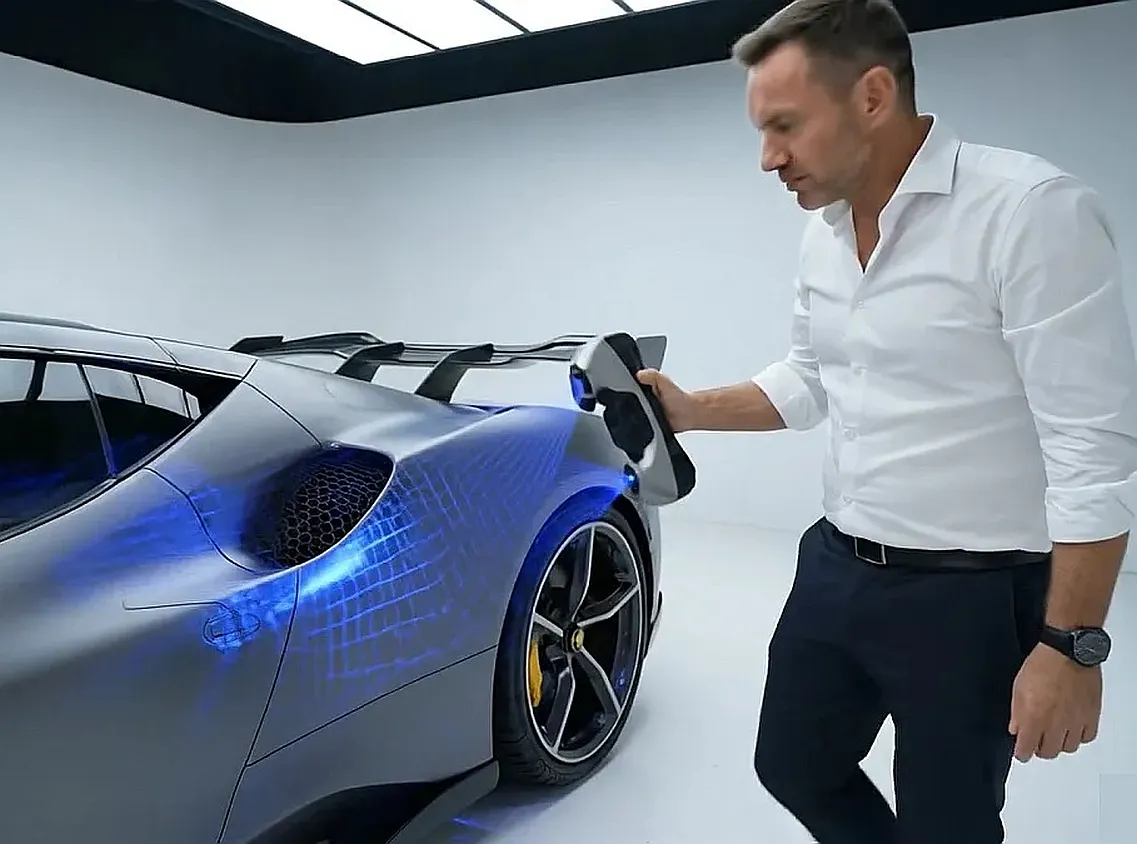
3D scanning is the process of capturing the physical shape of an object and converting it into a precise digital 3D model. Using laser or structured-light technology, millions of measurement points are recorded within seconds, creating a highly detailed “point cloud” that is transformed into a surface model ready for CAD.
The roots of 3D scanning go back to coordinate measuring machines (CMM) and early laser triangulation systems in the 1980s and 1990s. The real acceleration began in the 2000s, when computing power, optical sensors, and software algorithms dramatically improved. Faster processors and better cameras enabled portable, high-resolution scanners that made the technology accessible beyond metrology labs.
Today, 3D scanning is essential in mechanical engineering, aerospace, medical design, and especially automotive development. It allows engineers to capture existing components, check tolerances, and compare real parts with nominal CAD data. In automotive studios, clay models are scanned to digitize complex surfaces. Designers can then reverse-engineer these shapes into Class-A CAD surfaces, refine them digitally, and prepare them for tooling and production.
The key advantage is speed and accuracy: physical ideas become digital assets in hours, not weeks. 3D scanning bridges craftsmanship and engineering — transforming creative surfaces into production-ready data.
What different 3D technologies do exist?
Several 3D scanning technologies exist, each optimized for specific applications:
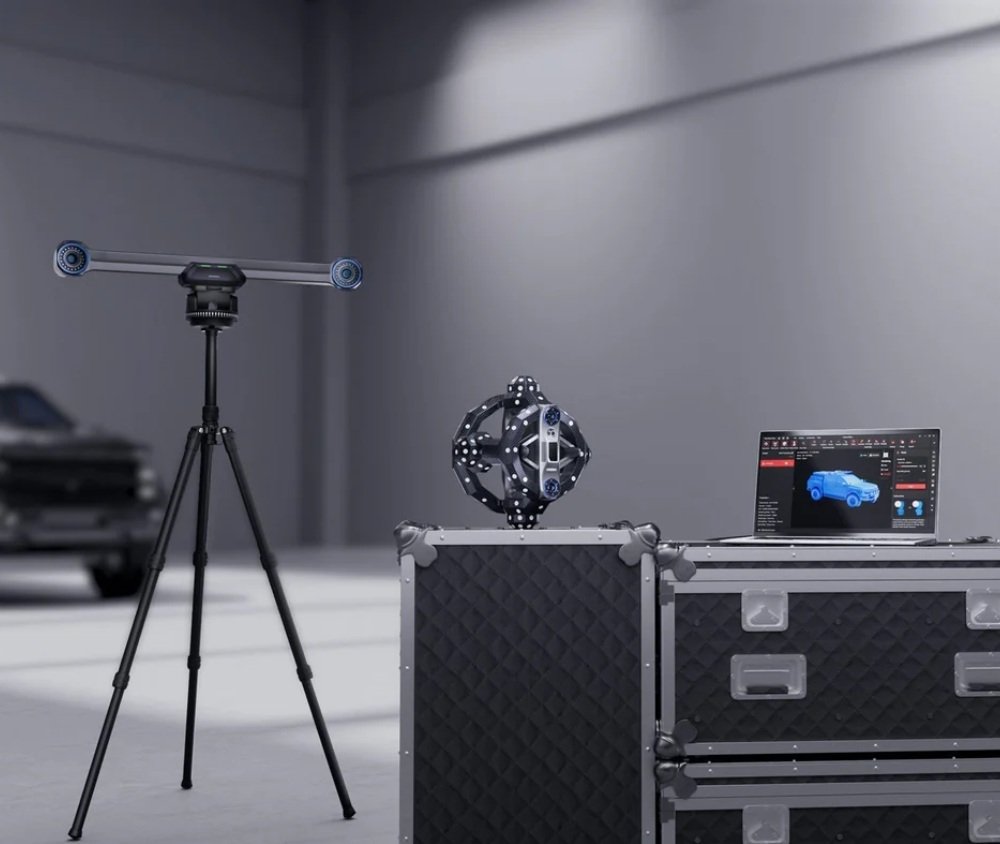
Structured Light Scanning projects a light pattern (often blue or white light) onto an object and analyzes its deformation. It delivers high accuracy and is widely used for mechanical parts, automotive components, and clay design models.
Blue Laser Scanning uses laser lines for highly precise measurements and performs well on dark or reflective surfaces. It is commonly used for inspection tasks, sheet metal parts, and tight-tolerance mechanical components.
Photogrammetry reconstructs 3D geometry from multiple photographs taken at different angles. It is ideal for large objects, sculptures, or architectural elements and is often used in heritage preservation and large-scale modeling.
Terrestrial Laser Scanning (LiDAR) captures millions of points over large distances and is used for buildings, industrial plants, and outdoor environments.
Each method balances accuracy, speed, portability, and scale — making the right choice dependent on the project’s size, material, and precision requirements.